
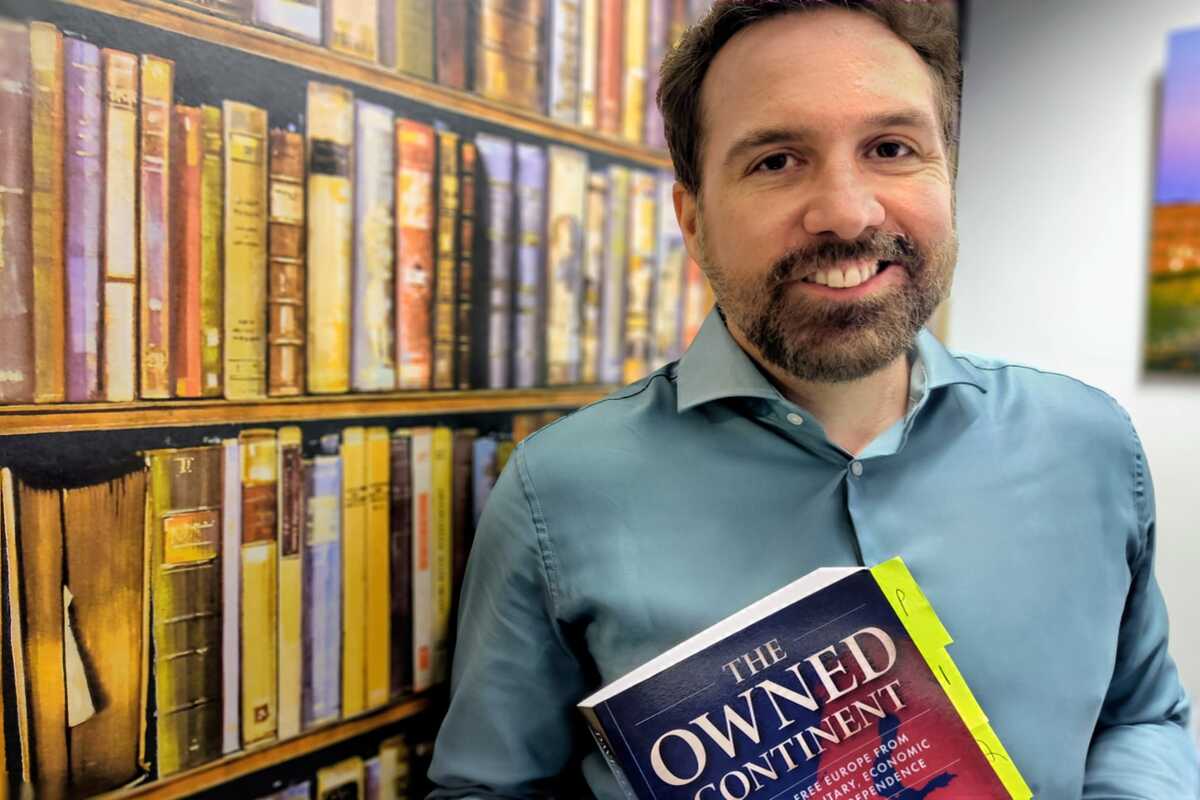
“News editors do not go to all the papers in Europe scanning for headlines,” Keating says. “I don’t think national editors across Europe are doing that.”
Instead, US media outlets often set the agenda.
“A typical German editor is going to get up in the morning, scan The New York Times, scan Financial Times, scan The Wall Street Journal. But he’s not going to scan Le Monde,” Keating says.
Why Keating argues Europe “surrendered” to Trump?
The book opens with a moment many European leaders would rather forget. Facing Trump’s tariff threats and security blackmail, the EU and the UK accepted lopsided trade concessions. NATO leaders publicly flattered a US president who openly toyed with the idea of annexing Greenland.
Trump later boasted that Europeans “call me the president of Europe.”
“All of that groveling, sacrificing so much of Europe’s dignity and self-respect — and they couldn’t even extract an Article 5 commitment from Trump,” Keating tells his Substack followers.
Keating’s central question is blunt: why did Europeans accept it? While China, India and Brazil resisted Trump’s pressure campaigns, Europe complied — largely without protest.
The explanation, Keating argues, goes beyond geopolitics or military dependence. Europe, he writes, lives inside an American ecosystem. From Hollywood and Netflix to iPhones, Visa cards and US social media platforms, American influence shapes how Europeans consume news, culture and politics.
Many Europeans know more about Washington than Brussels — making it psychologically difficult to see the United States as a potential threat rather than a protector.
Drawing on reporting from Brussels, London, Paris, Berlin and Washington, Keating traces how this dependence took root after the world wars — and how Trump learned to exploit it.
The book details America’s cultural, economic and military leverage, from dollar dominance to NATO command structures, and shows how European leaders have repeatedly failed to use the EU’s collective power.
How to break the dependence?
The Owned Continent is not only a diagnosis. Keating outlines six concrete steps to reclaim European autonomy, including building a genuine pan-European culture, creating sovereign payment systems and moving toward a more federal EU capable of acting strategically rather than submissively.
