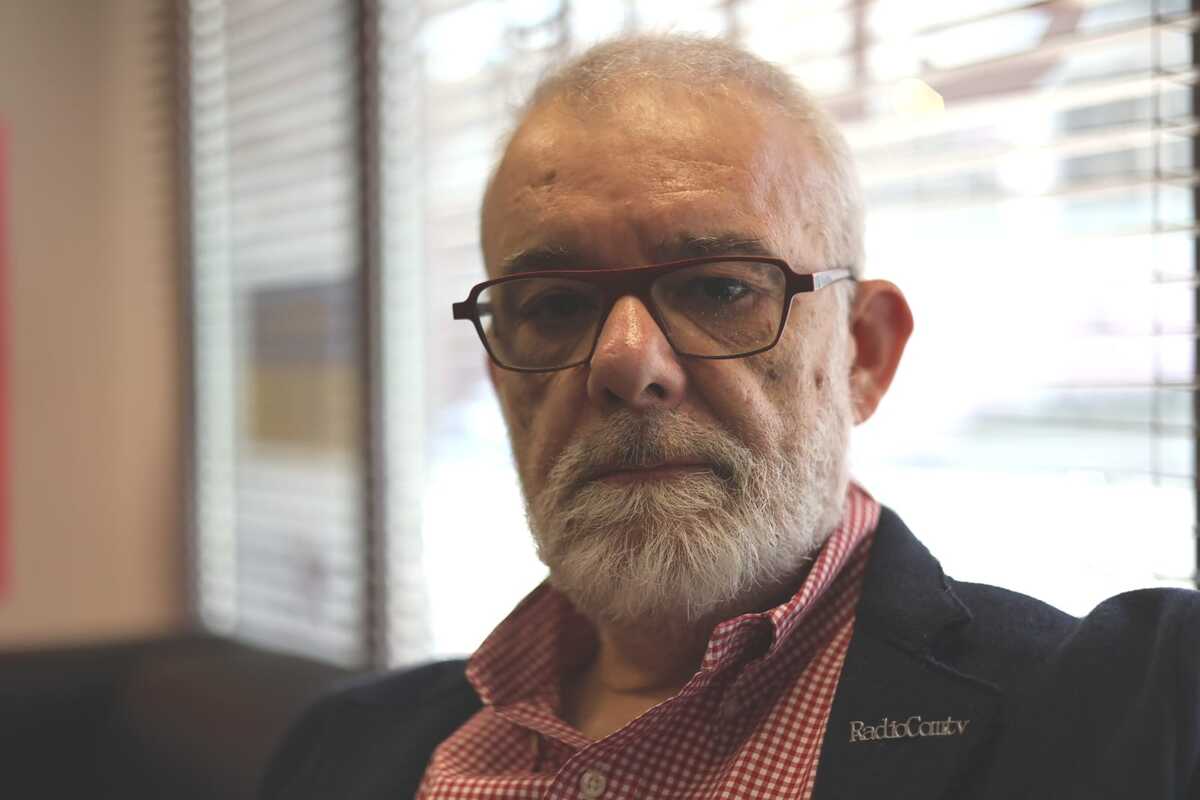

BRUSSELS — An Italian journalist based in Brussels was blocked for months from covering the Council of the European Union after Belgian authorities denied him security clearance over alleged “contacts with the extreme left,” a decision later overturned by an independent appeals body.
The case, which raises questions about press freedom in Belgium, security vetting of journalists, and the role of intelligence services in EU institutions, highlights the fragile balance between national security procedures and media access in Brussels, one of the world’s largest hubs for international reporting.
Security Clearance Denied Over “Extreme Left Contacts”
Filippo Giuffrida, a veteran correspondent accredited to European institutions since 2003, received a registered letter from the Belgian Federal Police on January 27, 2025 informing him that his security certificate had been refused.
Without that clearance, Giuffrida could not obtain the annual press badge required to enter the Council’s premises in Brussels.
“The letter simply said that I was supposed to have contacts with the extreme left,” Giuffrida told BraveNews.eu. “There was no definition of ‘supposed to’, and no definition of a ‘contact’ for a journalist.”
The decision effectively barred him from reporting from the Council — a core assignment for Brussels-based EU correspondents.
Months Without Access to the EU Council
Without accreditation, Giuffrida said he lost nearly a third of his professional activity.
While he retained access to the European Parliament and the European Commission, he could no longer report live from Council meetings or interview ministers arriving for negotiations.
“For months I could not do what I used to do before — reporting live from Council meetings or interviewing ministers,” he said.
For freelance journalists covering EU institutions, access to the Council building is essential for reporting on EU decision-making, ministerial negotiations, and diplomatic developments.
Appeals Process Raises Transparency Questions
Giuffrida quickly appealed under Belgian law, which requires authorities to acknowledge and process such appeals within 15 days.
But the procedure stretched for months.
His legal team only gained access to the case file in May, with a hearing before the security appeals committee scheduled in June.
When he reviewed the file, Giuffrida said it appeared largely empty — except for a letter inviting the head of the Belgian Military Intelligence Service to testify before the appeals panel.
The document suggested that military intelligence had been involved in assessing the journalist’s security clearance.
Appeals Body Rules in Journalist’s Favor
On July 7, the appeals body overturned the refusal.
The panel concluded that the decision had been poorly justified and unsupported by serious evidence, and instructed authorities to grant Giuffrida the requested clearance.
Giuffrida said he only discovered that his accreditation had been restored months later by checking the Council’s journalists’ webpage himself.
“I went on the Council’s journalist page and found out that finally my accreditation was reinstalled,” he said.
His press access was fully restored in September 2025.
Concerns Over Surveillance and Due Process
The episode raises broader questions about transparency and oversight in Belgium’s security screening procedures.
“Why was the military secret service dealing with the case of a journalist?” he asked.
He also described what he called a suspicious coincidence during the appeals process.
One Friday afternoon, at around 5:30 p.m., Giuffrida said he spoke by phone with his lawyer about filing a lawsuit against the Belgian government for failing to respect legal deadlines.
Half an hour later, his lawyer received a call from a federal police officer informing him that a hearing had suddenly been scheduled for the following week.
Giuffrida said he has no proof that his phone was monitored — but the timing raised questions.
“Of course, I have no evidence,” he said.
Financial Cost for Freelance Reporter
The case also had a financial impact.
As a freelancer working for several Italian outlets, Giuffrida estimates he lost substantial income during the eight months without access to the Council and spent nearly €5,000 in legal fees.
He considered suing the government to recover the costs but was advised that such a case could take 15 to 20 years.
Giuffrida maintains that political views or professional contacts should never be grounds for restricting journalistic work.
“As journalists, it is normal to have contacts with left-wing, right-wing, centre,” he said. “That is part of our job.”
Journalist’s Professional Background
Giuffrida works for several media organizations, including the Italian news agency 9Colonne and RadioCom, a broadcaster serving Italian expatriate communities across Europe.
He also serves as vice president of the International Federation of Resistance Fighters (FIR), an anti-fascist movement recognised, in 1987, by the United Nations as a “Messenger of Peace”.
Background: Police & Brussels Journalists
David Price (Belgium, 2025)
Belgian federal judicial police raided the Brussels home and office of UK journalist David Heilbron Price, 82, editor of eurDemocracy and Schuman.info, on 24 June 2025. Authorities seized laptops, backup drives, documents, and personal papers without leaving a warrant or written notice. Equipment was held for over seven months before being returned in February 2026. The case has been referred to Belgium’s Police Supervisory Committee (Comité P).
Martin Banks (UK, 2022)
Brussels-based journalist and Foreign Correspondents’ Association member Martin Banks was detained for six hours by UK border officials under counter-terrorism legislation. Authorities confiscated his laptop and two mobile phones, gaining access to confidential journalistic material.
Hans-Martin Tillack (Belgium, 2004)
Belgian police raided the home and office of German journalist Hans-Martin Tillack after he reported on alleged corruption inside EU institutions. Acting on a request from OLAF, authorities seized computers, phones, notebooks, and files. In 2007, the European Court of Human Rights ruled the operation violated press freedom and ordered Belgium to pay €40,000 in damages and costs.
Resources for Journalists: Where to File Complaints
Journalists in Belgium can seek redress through several oversight bodies:
- Comité P: Investigates police misconduct and failures in procedure.
- Belgian Data Protection Authority: File complaints if digital privacy or device searches violated rules.
- European Ombudsman: Handles maladministration involving EU institutions.
- Press-Freedom Support: IPI, EFJ, and API‑IPA.
