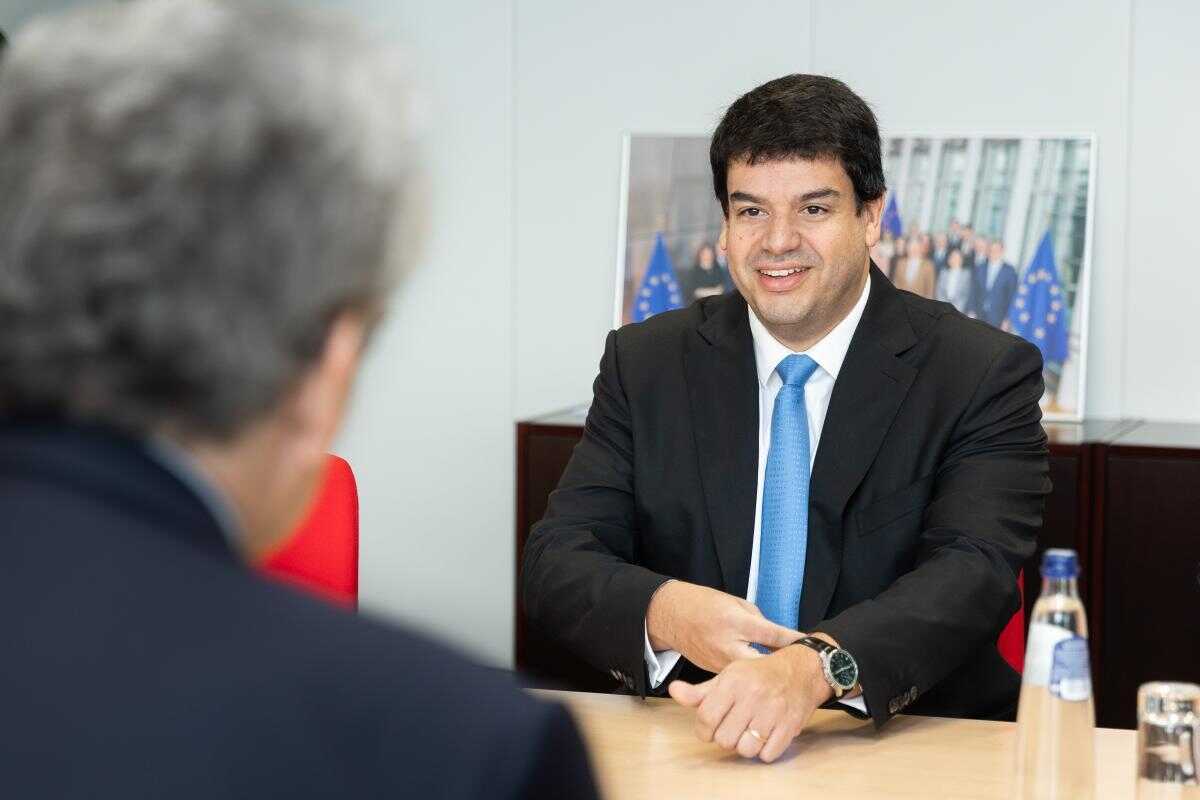

BRUSSELS — The European Board for Media Services is reviewing the acquisition of Adria News Network (ANN) by Alpac Capital, the investment firm that owns Euronews. The network includes major news outlets in Serbia, Slovenia, and Croatia. Alpac Capital Chief Executive and Euronews Board Chair Pedro Vargas David defends the acquisition as a step toward modernizing the regional press corps through “serious, non-activist, Western-style journalism.”
The inquiry into Alpac’s latest purchase follows calls last month from journalist organisations and press freedom groups warning that the deal could lead to harmful media concentration and potential political influence ahead of Serbia’s parliamentary elections in October. The election was called by Serbian President Aleksandar Vučić after 18 months of widespread anti-government and anti-corruption protests.
An EU official told Bravenews.eu confirmed the European Media Board’s ad hoc expert group is now tasked with analysing this “media market concentration”. But the official added the group’s first task is to assess the admissibility of the case under the EMFA. “We therefore have no comment at this stage on whether the present transaction falls within the scope of the EMFA,” the official said.
“Journalists are not assets to be transferred from one owner to another alongside a company, and newsrooms must not become instruments of political or commercial interests,” said Maja Sever, president of the European Federation of Journalists (EFJ). The federation and the Balkan Free Media Initiative have urged European authorities to conduct an urgent regulatory review. Critics point to Alpac Capital’s 2022 acquisition of Euronews, which involved opaque financing structures tied to Hungarian funds linked to the government of former Prime Minister Viktor Orbán.
Vargas said Alpac is in Serbia to create a “solid and profitable business”.
“We are here to build bridges; let’s move past the time of burning flags,” he said. “We believe in a European Serbia,” he added, in a response to Serbian Information and Telecommunications Minister Boris Bratina, reported by N1, one of the news outlets acquired.
Vargas also noted that when journalists use their platform to share an agenda, they change the nature of their profession. “Do not get me wrong: in democracies, this is a legitimate move – we are all free,” he said, albeit noting that such a move does not help journalism nor its credibility.
Minister Bratina had called on Vargas earlier this month to register newly acquired television channels N1 Belgrade and Nova S with the domestic Serbian regulator—”just as you previously did with TV Euronews Serbia”—rather than relying on Luxembourg’s media authority, ALIA, which he accused of facilitating a “scam of the century”, shielding the broadcasters from “all accountability” in Serbia.
“These television channels have realistically become the primary and indispensable political actor within the opposition and anti-government spectrum,” Bratina wrote to Vargas.
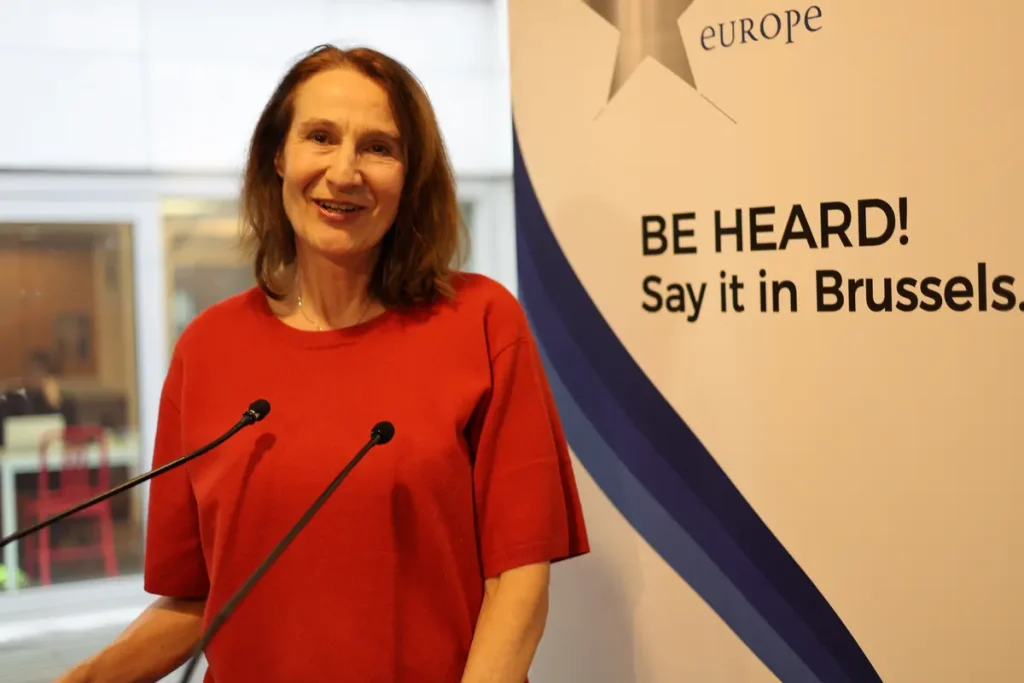
EFJ director Renate Schroeder said Vargas’ “concerning” response echoes Serbian President Vučić’s narrative, only wrapped in corporate talk. “It resembles the rhetoric often used by those in power to discredit critical journalism,” Schroeder told Bravenews. “A critical journalist becomes an “activist”, an uncomfortable question becomes an “agenda”, and persistent scrutiny of those in power becomes “taking sides”,” she said.
Testing the Limits of the European Media Freedom Act
The Media Board—established in February 2025 under the European Media Freedom Act (EMFA) to advise the European Commission—is now forming an ad hoc expert group to evaluate the €30 million transaction. The group will assess whether the sale risks market overconcentration or undermines the EU’s internal media market.
However, the regulatory issues remain complex. The primary entities involved—including United Group, Adria News S.à r.l., Alpac, and European Future Media Investments (EFMI)—are all formally registered in Luxembourg.
Because the outlets operate across several non-EU jurisdictions, there are questions as to whether standard analysis can address the deal’s broader political impact. United Group’s media holdings span Bosnia and Herzegovina, Croatia, Montenegro, Serbia, and Slovenia. Its portfolio includes major television networks N1 and Nova S, newspapers Danas and Vijesti, the weekly magazine Radar, regional editions of Forbes, and related digital portals.
The Independent Journalists’ Association of Serbia (IJAS) raised additional concerns over recent management shake-ups made before regulators completed their review. According to Serbian news reports on filings in the Serbian Business Registers Agency, senior executives were replaced in August with Alpac Capital Chief Executive Pedro Vargas David taking over. IJAS cautioned that the rapid management turnover mirrors actions taken after Alpac acquired Euronews.
Watchdogs remember Alpac’s Euronews acquisition
The press watchdogs also note that the €30 million purchase price was facilitated through a non-public equity commitment letter, raising questions about the ultimate identity of the venture’s financiers. That links back to investigative news reports, in Le Monde, Direkt36, and Expresso, resulting in an own-initiative investigation in 2024 by Portugal’s media regulator ERC, recounting the complex financial structures behind the majority shareholder, Alpac Capital, and the links to Hungarian and Abu Dhabi business interests.
Fines issued to Alpac by Portugal’s securities watchdog CMVM over anti-money laundering compliance failures did little to quieten concerns raised by critics that Hungarian Prime Minister Viktor Orbán could, if needed or wanted, exert indirect influence over Euronews’ editorial line. Alpac, which owns 97.6 percent of Euronews, also has an investment footprint and dealings in Qatar, Hungary, the Middle East and Central Asia—commercial connections that coincide with the network’s coverage from Azerbaijan, Kazakhstan, Uzbekistan and Qatar.
“When it comes to the shareholders, we have specific criteria in place to guarantee the editorial independence of Euronews,” European Commission spokesperson Thomas Regnier told Bravenews.eu. “The Commission, of course, when giving funding, always puts in place the appropriate safeguards,” he added.
In December 2025, the Commission’s Directorate-General for Communications Networks, Content and Technology (DG Connect) awarded more than €12 million to Euronews across three projects, including nearly €3 million to launch Hungarian- and Polish-language services.
