
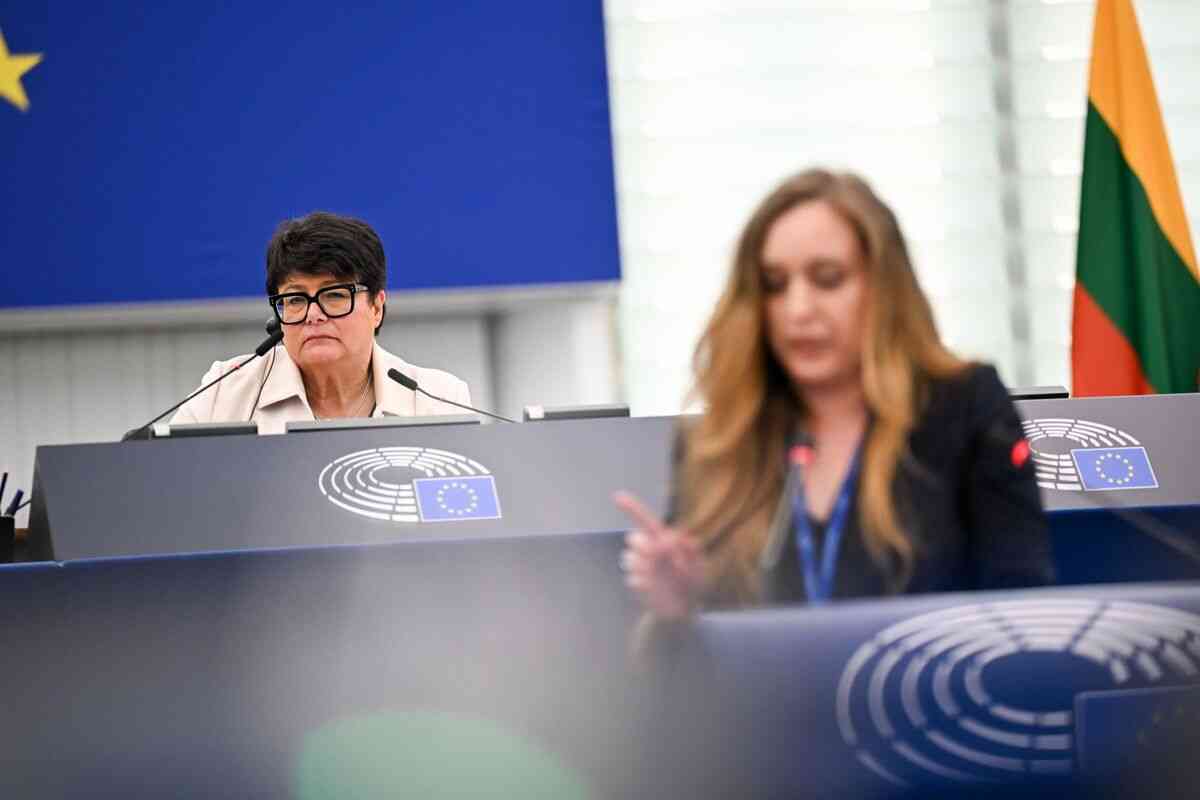
Brussels — The European Parliament’s push for €1.25 billion in EU financial support for journalism is now drawing criticism from media advocates who warn that politically framed elements of the plan could compromise editorial independence and undermine the integrity of public media funding.
“I want to have free and independent media and that means that we should not frame it too close,” Sabine Verheyen, Vice President of the European Parliament, said. She warned that such “close framings” could pose a danger and “might lead to political influence and interpretation.”
Concerns Over Editorial Independence Emerge Early
Similar concerns were raised by Peter Erdelyi, founding director of the Center for Sustainable Media. “The moment the legal text names which narratives journalism should combat, we’ve opened a door that other political majorities will happily walk through with their own preferred narratives,” said Erdelyi.
Among the more controversial sections is language identifying the programme’s role in “fighting gendered disinformation and anti-gender narratives.”
“Gendered disinformation is real and worth addressing, but a budget regulation should set policy priorities, not editorial ones,” said Erdelyi.
Larger Budget for Journalism, With New Constraints
The debate follows the Parliament’s publication earlier this month of its draft position on the AgoraEU programme, a flagship funding instrument proposed under the European Union’s next Multiannual Financial Framework.
The Parliament’s proposal received a mixed reaction from media organisations seeking greater public support as the EU news sector grapples with acute financial pressures, including a drop of €7 billion in revenue between 2019 and 2023.
On one hand, lawmakers proposed increasing the overall AgoraEU budget from the European Commission’s proposed €8.6 billion to more than €10.7 billion. Parliament also backed the creation of a dedicated ‘information and journalism’ funding stream, a move seen by many in the sector as recognition of journalism’s public-interest role.
However, the proposal would cap that journalism allocation at 11.7% of the overall AgoraEU budget, amounting to roughly €1.25 billion over seven years. While media organisations initially focused on the need for significantly more funding for a media sector facing economic turmoil, attention has increasingly shifted to provisions governing the programme’s objectives.
Debate Over ‘Anti-Gender Narratives’
Critics argue that the phrase “anti-gender narratives” introduces a political framing into a funding mechanism that is supposed to support independent journalism. The term has increasingly been used by some policymakers as a catch-all label for arguments opposing abortion or same-sex marriage, advocating for sex-based rights, or challenging the legalisation of surrogacy and prostitution.
Supporters of the language argue that such narratives all derive from an international networkof right-wing Christian conservatism that undermines Europe’s democratic values.
Questions surrounding family policy, sex and gender, reproductive rights and exploitation of women, remain among Europe’s most divisive political debates. Journalists, critics argue, must be able to report on these subjects without pressure to adopt narratives favoured by political majorities.
Media freedom organisations have long supported public funding mechanisms to sustain journalism as a public good. At the same time, they have generally insisted that such schemes be grounded in political neutrality, support a diversity of viewpoints and guarantees of editorial independence of participating outlets.
Gian-Paolo Accardo, executive editor of VoxEurop, a regular recipient of EU grants, said the Commission has never interfered in their journalism and that editorial independence is enshrined in the grant agreements, adding “smaller independent news media are so underfunded that public funds can help pluralism and democracy, provided they are directed to professional media.”
Accardo agreed that the EP amendment risks opening the door to groups imposing their political agendas and that a more neutral formulation should be used.
As negotiations over the EU’s next long-term budget continue, the final shape of the AgoraEU programme is likely to remain a focal point in the broader debate over how Europe can support journalism without compromising its independence.