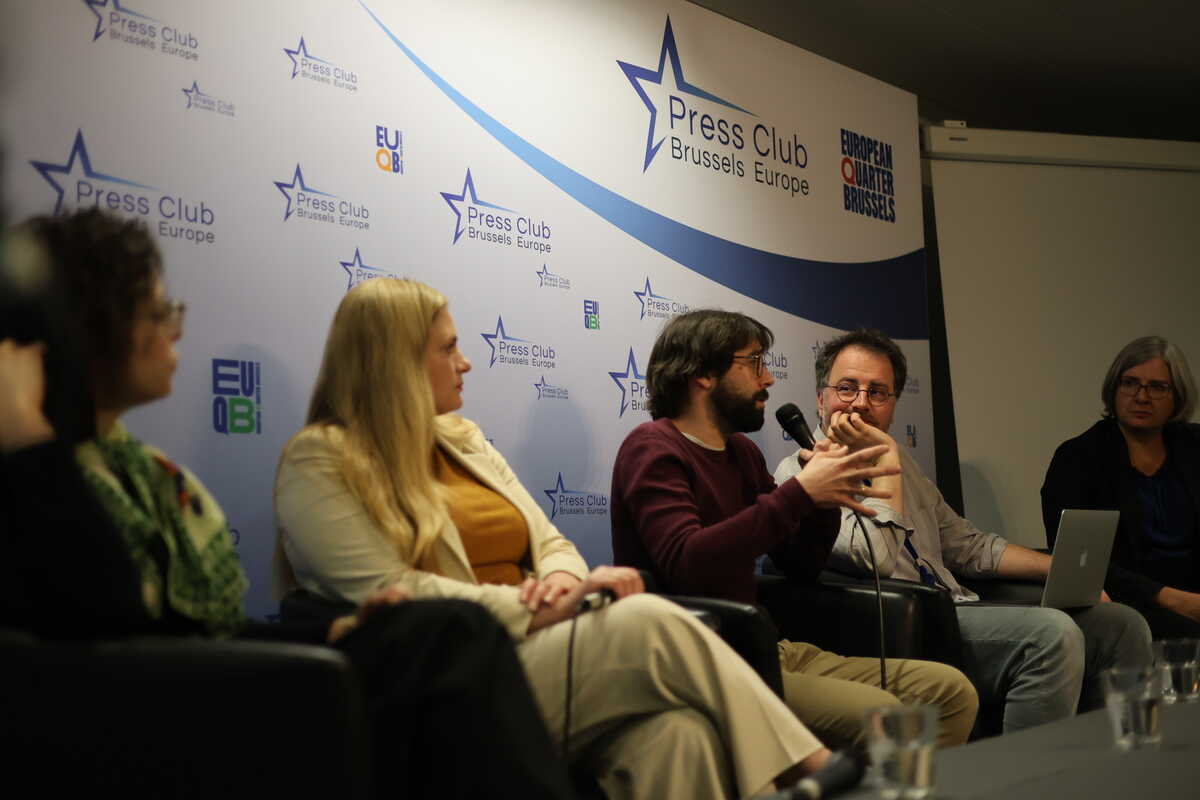
The erosion of transparency and access for Brussels-based journalists dominated discussion at the launch of the EU Journalism Initiative (EUJI) at the Brussels Press Club. The panel, featuring speakers from Investigate Europe, MLex and POLITICO Europe, quickly focused on what participants described as tightening control over information flows in the EU capital.
Editors pointed to growing restrictions on access to officials and events, alongside a more disciplined and less forthcoming spokesperson culture. The shift, they said, is making it harder for journalists to gather information and hold institutions accountable.
“There’s been a tightening of the rules around access, even to spokespeople — what they’re allowed to say — with more control and professionalization,” said Kait Bolongaro of MLex. “I’ve been here about 10 years, and I’ve definitely noticed a change.”
Speakers also raised broader structural concerns about accountability. Compared with national politics, Brussels often lacks strong public engagement, reducing pressure on EU institutions to be transparent. While transparency frameworks exist, enforcement remains weak, with limited consequences for non-compliance.
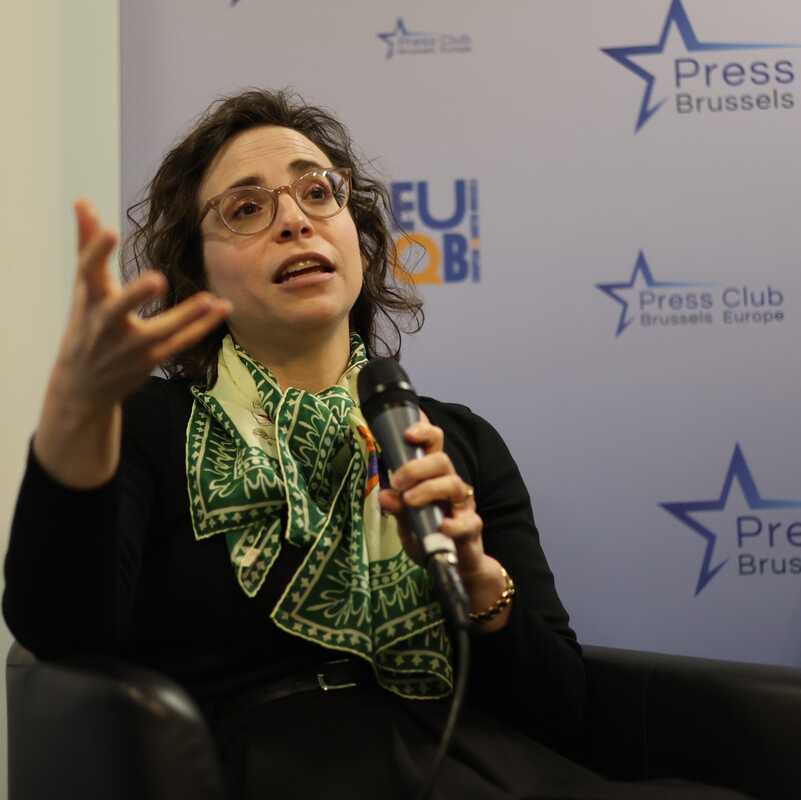
“When Ursula von der Leyen increases transparency rules for others, she has reduced her own implementation,” said Sarah Wheaton of POLITICO Europe, citing the so-called Pfizer-Gate controversy. “She was slapped down by the European Court of Justice but hasn’t changed her behavior. Now she can claim cybersecurity as a reason to delete texts.”
The European Commission extended, from 1 January 2025, Transparency Register rules to senior officials requiring lobbyists to be registered for meetings. The Commission should also publish meeting details and minutes, though journalists question whether this is leading to real accountability.
Wheaton drew a stark comparison with Donald Trump. “Trump is pretty much the most transparent president in history. He answers questions more than any other. You know what he’s thinking all the time,” she said.
Jean Comte of Mlex pointed to a lack of enforcement as a core weakness in the EU system. The rules aren’t “that bad”, he said. At least there is a transparency register,” he said. “The problem is there are no sanctions.” Comte cited cases of major French companies under-reporting lobbying spending by as much as 20 times, with no penalties after corrections were made.
Foreign correspondent API’s transparency representative
Pascal Hansens of Investigate Europe is conducting a survey of journalists’ experience on official access to information procedures. That may help counter the European Commission’s positive self-assessments. A common complaint that journalists make is that freedom of information requests are often returned with crucial information blacked out or come many months too late. But Hansens warned that legal avenues to gain access to information held by EU institutions are often impractical.
“It can be very costly, and you have to be ready to go down that road. You don’t know the final result,” he said, noting that cases before the European Court of Justice can take many months. “It’s a bet. I wouldn’t choose the court immediately.”
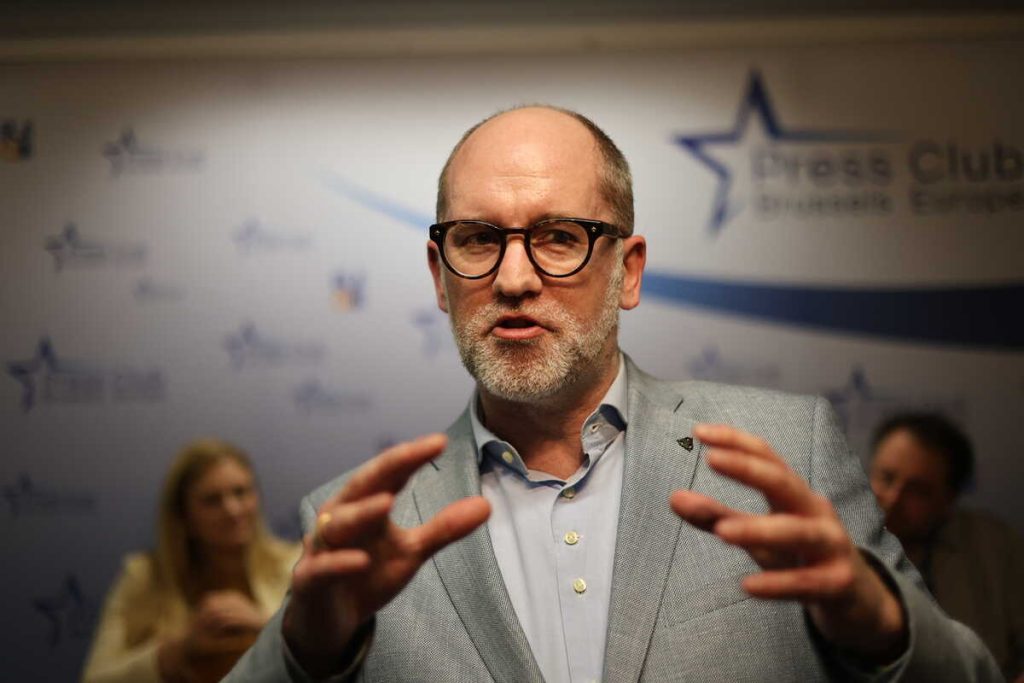
EUJI co-founder Todd Buell said the initiative aims to bring journalists together around shared challenges, including access to documents, transparency and media independence, as well as emerging issues such as artificial intelligence. “We also want to go beyond that — training in management, transparency, even how to report from conflict zones,” he said.
Buell invited journalists to join the volunteer-run initiative by signing up on LinkedIn . The EUJI is seeking to build a more coordinated response to the challenges facing the Brussels press corps.